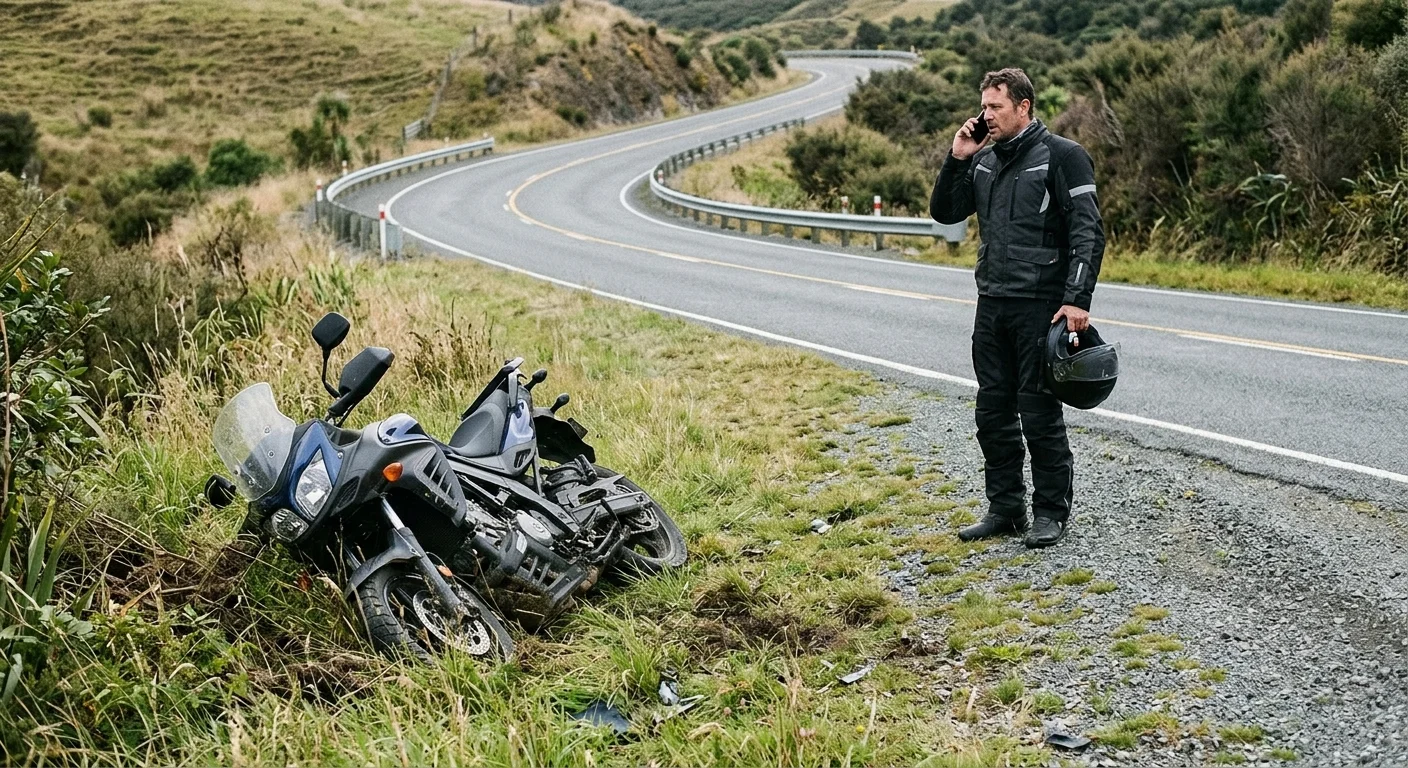
The motorcycle is down, you’re off the travel lane, and the call you need is recovery, not a repair guess. For motorcycle accident towing in El Paso, the operator we dispatch needs five things: the exact crash location, a plain description of the bike, whether it can roll and steer, who currently controls the scene, and where the motorcycle should go. Share those before anyone tries to lift it.
Give the exact crash location
A motorcycle down in Central El Paso is not the same recovery as one in Horizon City, and it’s not the same as one on the Westside under the Franklin Mountains. Name the place first: El Paso, Horizon City, Socorro, Clint, Canutillo, or Sunland Park. Then give the road, the direction of travel, and the nearest cross street, exit, or mile marker you can actually see.
If you’re on I-10, say eastbound or westbound and the last exit you passed. If you’re on Loop 375, say whether you’re on the Border Highway along the river or on the northeast loop toward Fort Bliss. If you’re on Woodrow Bean Transmountain Drive, say which side of the pass. The operator isn’t running a generic city grid.
Horizon Boulevard is FM 1281, the main commercial road through Horizon City. Access from I-10 to that corridor comes via Eastlake Drive. If the crash is there, say Horizon City and the nearest cross on Horizon Boulevard. A pin that only says El Paso can send the truck to the wrong map.
Socorro, Clint, and the run toward Fabens sit on North Loop Drive, the local name for FM 76. That TxDOT corridor runs about 12.5 miles from Horizon Boulevard to Alameda Avenue (SH 20) in Fabens. Most of it is a two-lane, two-way rural road with 4-foot shoulders. A motorcycle on its side there uses a lot of the remaining space. Name the nearest cross or a landmark you can see.
If you’ve crossed into Sunland Park, say New Mexico in the first sentence. Texas starting figures don’t automatically apply across that line, and we will not attach a dollar amount to a New Mexico tow. Confirm the work with the operator before anyone hooks the bike.
Parking-lot crashes still need a pin. “Cielo Vista, south lot, near the theater doors” beats “the mall.” If you already moved the motorcycle onto a side street, give that new pin. If a friend is calling from a waiting room while the bike is still on Pellicano, Zaragoza, Dyer, or Mesa, the person at the pavement has to speak. Stay out of the travel lane while you talk. Distant Lower Valley and Horizon City runs take longer than a Central street. Ask the operator for an arrival estimate. We can’t promise one.
Describe the motorcycle without diagnosing damage
Don’t diagnose. Don’t say the frame is bent if you’re guessing. Say what you can see from a safe spot.
Make, color, and about what year if you know it. Then say what is touching the ground. “Red cruiser, left side down, in the dirt past the curb” is useful. “It’s totaled” is not. The operator we send is not your mechanic, and we are not a shop. They need the sitting position so they can plan the pickup, not a bodywork opinion.
Say whether fluids are on the pavement. Say whether the bike is in a travel lane, on a shoulder, in a median, in a ditch, or in a parking lot. A motorcycle in sand off Loop 375 is a different recovery than a bike on its sidestand in a Westside lot. If a bag, windshield, or fairing is still in the lane, say so. Don’t step into traffic to gather parts. Loose pieces that are already with you can go with you. Pieces still in the road stay put until the people running the scene say otherwise.
If this was not a crash, and the motorcycle simply will not fire, that’s a different call. Use the no-start motorcycle dispatch notes for a bike that’s still standing. Crash recovery is about position, authorization, and destination.
Have the plate ready if you can read it without walking back into the lane. Registration and insurance help later if the motorcycle goes into a storage facility. Texas storage facilities can ask for photo ID and proof of ownership before release. That’s a retrieval rule, not a reason to delay the first call while you dig through a bag on a live shoulder. Visible condition only. Leave the cause, the speed, and the other driver for the officer and your insurer.
Explain whether it can roll and steer
The operator needs to know if the motorcycle can be walked or rolled, or if it’s locked in place. You’re not being asked to ride it. You’re being asked whether the wheels turn and whether the bars still steer.
If the front wheel is folded, say that. If a peg is dug in and the bike will not roll, say that. If you already stood it up and it rolls in a straight line, say that. If you haven’t touched it because an officer told you not to, say that too. Don’t test-ride a crashed motorcycle on I-10, Loop 375, or Transmountain to “see if it’s fine.”
Keys matter. If the steering lock is on, say so. If the key is with you, say so. If the key is still in the ignition and you can’t reach it safely, leave it and tell dispatch. A motorcycle towing operator decides how to move it. We don’t prescribe straps, chocks, or a loading method from this desk. Guessing that gear wouldn’t help you, and it isn’t our job.
Mention a sidecar, a trike conversion, crash bars, a trailer hitch, or hard bags that keep the bike from sitting upright. If only one wheel turns, say which one. If a brake feels locked, say front, rear, or you can’t tell. Short physical facts beat a story about how the crash happened. Save the story for the officer. Dispatch needs the snapshot: rolls or doesn’t, steers or doesn’t, key present or not.
Confirm who currently controls the scene
Before anyone from our network puts equipment on the motorcycle, someone has to have the right to move it. If El Paso Police, the county, DPS, or another agency is on scene, they control it. Ask the officer if the bike can be released to a consent tow that you request, or if it’s going as a nonconsent tow to a storage facility.
Those are different jobs. A consent tow is one you ask for. A nonconsent tow is one ordered without your agreement, often after a crash or a stop. Texas regulates both through the Texas Department of Licensing and Regulation. You can read TDLR’s consumer towing rules before you pay a nonconsent bill. Statewide maximums for a nonconsent tow of a vehicle 10,000 pounds or less are $272, plus listed extras such as a notification fee up to $50. Those caps are law, not our price list. Local El Paso ordinances, police wrecker rotation, and any city lot address or hours are not confirmed on this page. Don’t guess them. Ask the officer who authorized the tow.
If nobody in uniform is there yet, and people are hurt, call 911 first. Recovery waits. If everyone is up and the motorcycle is only in the way, still stay out of the lane. Texas’s Move Over law, Transportation Code § 545.157, requires other drivers to change lanes or slow when they approach a stationary emergency vehicle or a permitted tow truck using proper lights. First-offense fines run $500 to $1,250. That law protects the scene. It doesn’t give you permission to walk the bike in a live lane.
If a property manager or a bystander is telling you the motorcycle has to leave now, that isn’t the same as a police order. Confirm who actually has authority. You can check that a tow operator is licensed through TDLR’s license search. Search by tow truck operators, name, city, or license number. Quick Tow El Paso is a dispatch and referral service. We connect you with licensed, insured operators. We don’t run a yard, own wreckers, or hold a tow license. The contract for the recovery is between you and the operator who shows up.
If the motorcycle already left without you, treat it as a towed-vehicle problem, not a still-on-scene recovery. Ask the agency that was there where it went. Don’t rely on a guessed city lot.
Choose the destination before recovery
Don’t let the truck roll on “just get it out of here.” The operator needs a street address, a shop name, a residence, or a storage facility before the motorcycle is loaded. Changing the drop after the truck is moving can change what the operator charges. Confirm the destination and the amount with them before the bike is loaded.
For a light-duty consent tow on the Texas side, the starting figure we quote is a $95 hookup plus a per-mile rate. That’s a starting figure, not the total. We don’t publish a per-mile number, and we don’t attach a dollar figure to a New Mexico recovery. The operator sets the rest.
If the crash was on the interstate, the steps after a car accident on I-10 still apply in spirit: get safe, deal with the scene, then choose a drop. A shop in Central is a different drop than a garage in Horizon City or a house in Socorro. Say the city. El Paso, Horizon City, Socorro, and Sunland Park are not interchangeable.
If you need accident recovery because the motorcycle is in a ditch, off an embankment, or behind a guardrail, say how far it sits from pavement and what the ground looks like: sand, gravel, a slope, a curb. Don’t ask us to promise a winch method. Describe the position. The operator decides the recovery.
If the bike may go to a vehicle storage facility, Texas retrieval rules apply once it’s stored. Owners need photo ID, proof of ownership (a license matching registration, an insurance card, a title, and several other listed documents), and payment of towing and storage fees before release. Access to get documents and personal property is free. Daily storage rates stated by TDLR are $20 per day for vehicles 25 feet or less, with a 2023 adjusted figure of $22.85 per day. A motorcycle is under 25 feet. If you were towed without consent, you may request a tow hearing within 14 days, excluding weekends and holidays, after the vehicle was placed at the facility. The filing fee is $20. That hearing is about probable cause for the removal, not crash fault. We don’t give legal advice. Injury, death, and fault are questions for 911, an officer, a lawyer, and your insurer. They are not dispatch questions.
Pick the destination while you still have signal. July highs in El Paso average 96.1°F per the National Weather Service normal. Standing over a dark motorcycle on a Westside shoulder in that heat is a bad place to shop for a drop-off. Name the address, confirm it with the operator, and stay out of traffic until they arrive.
When to call us
Call when the motorcycle can’t leave under its own power and you need a licensed towing operator to recover it. That includes a crash on I-10, a downed bike on FM 76, or a motorcycle still sitting where an officer told you to wait. Call us at (915) 615-2224 and we’ll connect you with an operator who handles this work.